Look up
with Byron
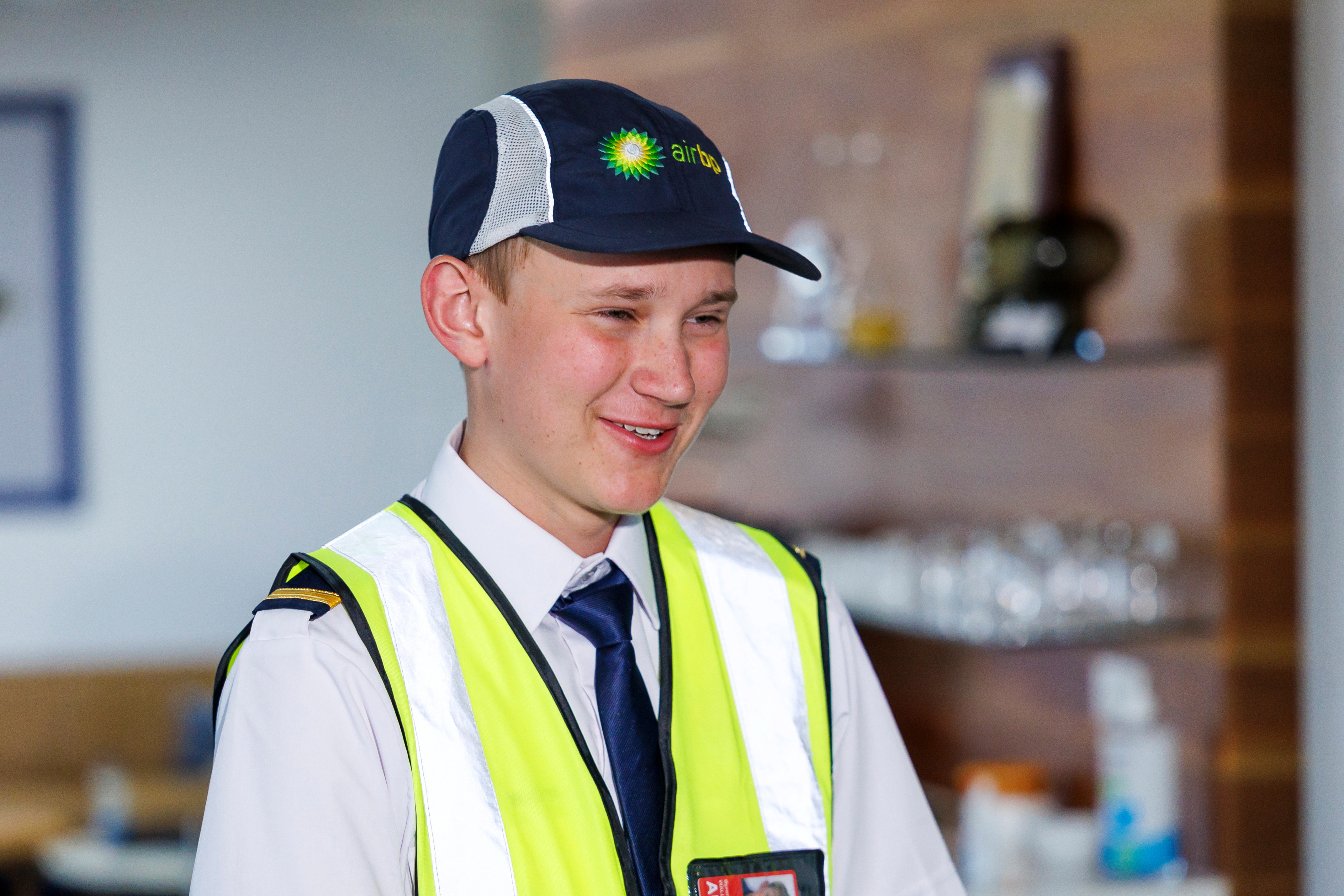
Byron is asking his generation, and everyone who cares about them, to look up with him now: look up from whatever is holding you down, connect with someone you trust and take one positive step toward what is possible.
- Endless screens & social media
- Anxiety & depression
- Loneliness & isolation
- Chronic illness & long hospital stays
- Disability
- Bullying & online pressure
- Cost of living & family stress
- Doubt about the future


Your challenge is real
So is your horizon
LOOK UP WITH BYRON is a youth reconnection campaign inspired by Byron's experience of Crohn's disease and long periods in hospital. Aviation gave him somewhere to direct his attention, energy and hope. Now, as a teenager himself, he is standing alongside his own generation, inviting each person to find their own reason to look up and move forward, together, starting today.
LOOK UP WITH BYRON is a program of the Teen Pilot Foundation, an Australian charity whose constitution exists to support young Australians aged 13 to 25 whose lives have been interrupted by serious illness, disability, mental health difficulty, financial hardship or other genuine adversity. Everything the campaign does points back to that purpose: building capability, confidence, connection and hope for the future.
The campaign asks each participant to do three things: take a deliberate break from their device, connect with a trusted person, and choose one manageable positive action. Schools, hospitals and community groups can bring people together around those steps and help them identify where further support is available.
Look Up encourages less distracting scrolling, while keeping access to learning, accessibility tools and trusted support. Start with one small change that makes more room for connection and movement.
Read the University of Sydney article on screens and learning
You do not have to see the whole flight path. Just look up long enough to find the next waypoint.
How we hold our heads
can shape how we feel
Most of us now spend hours a day with our heads tilted down toward a screen. Researchers have started asking what that posture does to the way we feel, and the early answers are gentle but encouraging.
In controlled studies, people asked to sit slumped reported more negative thoughts, recovered more slowly from a low mood, and recalled more negative memories than positive ones.
People asked to sit upright, eyes lifted, reported better mood, higher self-esteem, more energy and less fear under stress. In one study of people with mild to moderate depression, sitting upright lifted positive feelings and reduced fatigue.
These were small, short studies, so the science is promising rather than settled. It is not a cure, and it does not replace care from a doctor or counsellor. But lifting your eyes is one small thing anyone can do, right now, to give their mind a little more room. Then look around: someone you trust may be closer than you think.
Read the research yourself:
· Nair et al., Health Psychology (2015) — upright vs slumped posture under stress
· Veenstra, Schneider & Koole, Cognition and Emotion (2017) — posture and recovery from low mood
· Michalak et al., Clinical Psychology & Psychotherapy (2014) — posture and memory bias in depression
Built to hold
your attention
Devices are not evil, and they are not going away. But researchers are now watching what hours of daily screen time does to a brain that is still growing, and it is worth knowing what they have found so far.
In a study following more than 10,000 children, those who spent more time on screens showed slightly more attention difficulties and measurable differences in brain areas used for focus and self-control. Separately, one experiment found a single notification slowed people's thinking for about seven seconds, even when they did not pick up the phone.
Likes and messages arrive at unpredictable moments, and researchers note this is the same reward pattern that makes poker machines hard to walk away from. The brain keeps checking because the next reward might be one swipe away.
Evening screen use has been shown to delay the body's sleep signal, push back sleep and leave people less alert the next day. Tired brains find it harder to learn, remember and manage feelings.
None of this means a young person is broken. It means the deck is stacked: these apps are designed by very clever people to be hard to put down. Looking up is not about willpower. It is about giving your brain back some of the quiet it needs.
Read the research yourself:
· Computers in Human Behavior (2026) — one notification slows thinking for about seven seconds
· Sandra, Olson & Veissière, McGill University — unpredictable social rewards and compulsive checking
· Chang et al., PNAS (2015) — evening screen use delays the body's sleep signal
Pause
Choose a deliberate break from your device and notice what is happening around you.
Connect
Speak with someone you trust: a friend, family member, teacher, mentor or health professional.
Take one step
Choose one manageable action toward connection, curiosity, support or something you care about.
Share the invitation
Invite a friend, class, team or community to take the three steps alongside you.
To the kid reading this with your head down
The next flight starts at the bottom of the world, and so can you
Maybe you are in a classroom, a hospital bed or your bedroom, scrolling because it is easier than thinking about what is hard. Byron knows that place. He spent years as a patient before he was ever a pilot, and some days the ceiling was the only view he had.
In 2027 Byron plans to fly from the South Pole to the North Pole. He starts at the bottom of the world on purpose. Every great journey begins somewhere cold, quiet and far from where you want to be, and the only direction from there is up.
South
Start where you are
Low days count as a starting point, not a failure. Notice where you are, without judging it.
Compass
Find one person
No pilot flies the poles alone. Tell a parent, teacher, coach or friend one true thing today.
Horizon
Lift your eyes
Put the phone down for ten minutes. Go outside, look at the sky, learn something with your hands.
North
Keep heading up
One small step, then another. That is how you cross the whole planet.
When Byron reaches the top of the world, he wants to carry your story with him. Look up with him now, and be part of the journey from the very first mile.
If you are struggling right now, please talk to someone you trust, or call Kids Helpline on 1800 55 1800, any time, free.
The law shows what to step away from
LOOK UP gives them something to step towards
A positive companion to the age limits
Since 10 December 2025, Australia's social media minimum age has asked young people to step back from platforms. LOOK UP is a youth-led, positive invitation to fill that time with people, skills and purpose, led by one of their own.
Adults look up too
The campaign asks parents, grandparents, teachers and mentors to put their own devices down and pass on a skill face to face. Research links connection to family and school, caring adults beyond parents, and mentoring with better outcomes for young people (Steiner et al., Pediatrics 2019; Bethell et al., JAMA Pediatrics 2019; DuBois et al., 2011).
Measured, governed, safe
Outcomes are reported only once measured: registrations, participating schools and hospitals, and participant-reported connection are tracked from launch. Clinical governance is led by a clinical psychologist, LOOK UP complements professional care, and child safety sits under the Teen Pilot Foundation's policies.
Byron was born just after the iPhone reached Australia, part of the first generation to grow up with a touchscreen within reach. Through 2027, LOOK UP travels with his South Pole to North Pole flight into schools, hospital wards and communities. Government, ministers and public leaders are invited to take the LOOK UP pledge with him: one visible, ongoing action, such as a device-free family meal or mentoring a young person, shared with #LookUpWithByron.

Bring LOOK UP to your community
Young people can take the three campaign steps individually. Families, schools, hospitals, health services, aviation groups and youth organisations can register to bring the invitation to their community. Byron's team will use registrations to shape future activities and participation opportunities.
See the Teen Pilot Foundation →Every hour
off-screen
counts
The change isn't a donation. It's an afternoon learning to fix a bike, an hour with a mentor, a first sewing project, a walk without a phone. LOOK UP WITH BYRON invites organisations to make those moments part of their own culture, and to connect them to something much bigger.
Partners carry the movement inside their own communities, over the long term, under their own name and alongside Byron's. Every real-world hour their people give becomes a story worth telling, and quiet support for the Teen Pilot Foundation's work with young Australians aged 13 to 25 whose lives have been interrupted by illness, disability or hardship.
Your cause, lifted by a generation looking up
- — Give your supporters a meaningful, positive way to take part that isn't another ask
- — Stand beside a young pilot whose story began in a hospital bed
- — Bring your mission into a shared global movement, without losing your identity
- — Grow with the campaign all the way to the 2027 pole-to-pole flight
A culture your people will actually feel
- — Turn wellbeing and purpose into something your teams do together, offline
- — Mentorship, new skills and real connection that build a better workplace
- — A long-term story to share internally and with customers, not a one-off cheque
- — Your organisation's name on a journey from the South Pole to the North Pole
Become part of the movement with Byron
Your people swap screens for skills, mentors and moments
Every real-world hour adds to the shared story, and to your cause
Fly the whole movement with Byron in 2027
Founding partners are being welcomed now. The partnership model, activities and impact reporting are shared privately and shaped with each organisation.
Join Byron
Look up together
Tell Byron's team whether you want to participate, bring the campaign to your community, share it or explore a partnership. Registrations will guide where the campaign develops next.
LOOK UP is an invitation to reconnect and seek support, not a replacement for professional care. If you or someone else is in immediate danger or severe distress, contact local emergency services or a crisis support service in your country now. In Australia, young people can call Kids Helpline on 1800 55 1800, any time, free.